Be precise about your patch.
Imperial Wharf is listed with SW6. These are representative postcode districts, not exact boundaries. A complete job address and your starting point matter more than a district label.

Choose a working arrangement you can deliver consistently. Your Imperial Wharf application should explain the cleaning you know, the journeys you can manage and the hours that leave enough room for a careful appointment.
Each job is agreed around its address, tasks, hours and your suitability.
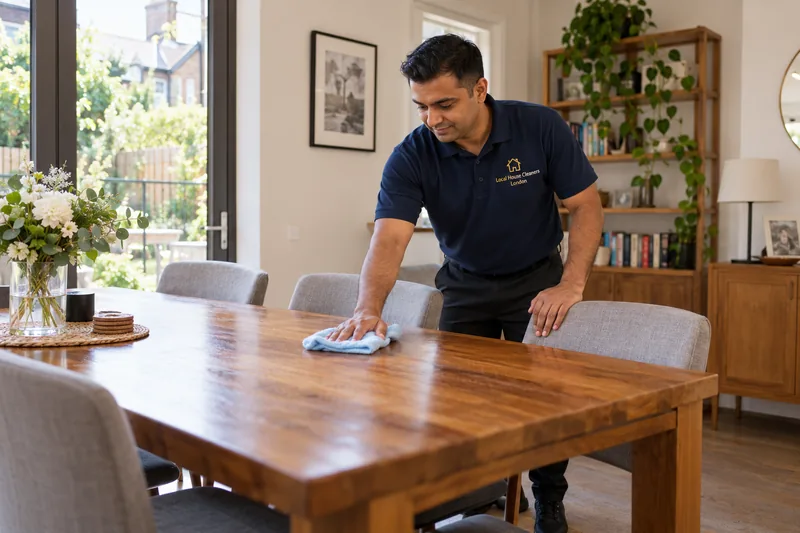 Imperial Wharf · SW6
Moving area names stop while hovered or focused. Press Enter or Space, or tap the moving area, to keep them still after leaving. Activate again to allow movement. Browse the directory for the complete list.
Choose the work you can deliver reliably, with clear travel limits, availability and skills.
Imperial Wharf is listed with SW6. These are representative postcode districts, not exact boundaries. A complete job address and your starting point matter more than a district label.
Share the days and hours you can reliably work, allowing time between visits. Early starts, evening finishes and any travel limits need to be clear before a job is agreed.
Tell us which cleaning tasks you can confidently deliver. Ironing, laundry and detailed cleaning use agreed time; specialist work needs the appropriate skills and equipment.
 Imperial Wharf · SW6
Fulham · Parsons Green · Hammersmith · Shepherd's Bush. Compare your preferred areas and check the complete address and journey before agreeing any work.
Imperial Wharf station is listed by TfL on Townmead Road with the postcode SW6 2ZH. National Rail gives the same public address. The fact that an operator’s address uses the Chelsea locality name does not turn it into a complete description of your customer’s location. When considering work here, use the station as a reference and then examine the private street address, building identification and entrance supplied for the appointment.
This distinction matters when arranging an arrival. A familiar station name can conceal an unfamiliar final part of a journey, especially if directions only name a development or nearby landmark. Ask the practical question before agreeing the start: where exactly should you present yourself, and who can respond if the instructions do not work? The cleaner’s working area should reflect that complete journey, with any agreed equipment considered, rather than the ease of recognising a place name on a map.
 Imperial Wharf · SW6
A useful cleaning brief describes the result the customer wants in the rooms they have included. Start there, then consider the time and materials needed to deliver it. For a kitchen, a request for accessible surfaces and a hob exterior is different from a request to empty storage or clean inside appliances. The difference should appear in the instructions instead of emerging only after you arrive.
You can help by explaining the order in which you would work and asking which result matters most if choices are needed. Bathrooms, floor care and additional household tasks can compete for the same hours. An agreed priority gives you a sound reason for that sequence and gives the customer a clearer expectation. It also makes a later update useful: you can explain progress against a shared plan rather than against a vague promise to make the whole home perfect.
Describe the methods you use for ordinary domestic cleaning and the care you take with different tasks. Knowing how to use suitable products, keep cloths separate and handle a vacuum safely tells the agency something assessable. Say when an unfamiliar finish would need clarification. No location page can establish that a particular home has certain materials, and no cleaner should be expected to infer a safe treatment from the address.
If you can also provide ironing or laundry assistance, explain that as a distinct skill. The customer’s garments, appliance instructions and available equipment still determine what is suitable at the visit. Linen changes need the relevant clean items and enough allocated time. Keeping these services specific helps prevent a broad application statement from becoming an expectation that all household work is automatically included in every booking.
The initial visit can reveal whether the request and the time allowance fit each other. Compare what you see with the description before starting work that differs substantially from the accepted brief. If the condition calls for more attention, explain the difference and discuss what can be achieved in the current slot. A sensible assessment is more helpful than rushing to conceal a mismatch.
As the visit develops, keep any obstacles clear and specific. Missing supplies, a room that cannot be entered or equipment that fails may change the result, but they do not all need the same solution. Explain what the issue prevents and what alternative would be possible with permission. The agency can then help resolve a concrete question. At the end, that first-visit record can inform a more accurate repeat plan instead of leaving everyone to reconstruct what happened from memory.
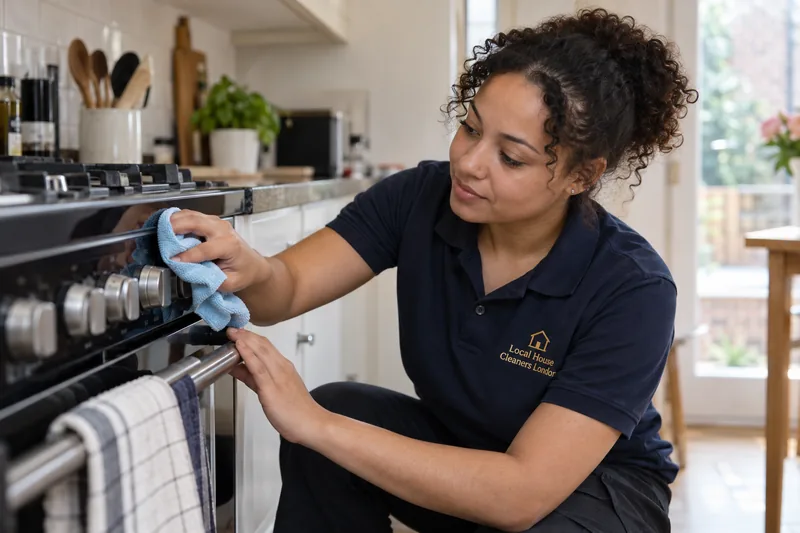 Imperial Wharf · SW6
Availability is useful when it describes hours you can actually keep. Include your earliest suitable arrival, any fixed finishing time and the days you want considered for Imperial Wharf. A smaller window that works regularly may be better than an expansive promise dependent on everything going perfectly. Do not assume a customer can change their access arrangement simply because the travel plan you first considered no longer fits.
Extra tasks need a corresponding decision about time. If the customer asks for more work, explain the effect on the accepted priorities or the need for an authorised extension. The advertised cleaner rate begins at £15 gross per cleaner-hour, while the specific offer determines the applicable pay and payment terms. Read those details before accepting and clarify how any additional time is approved. This page does not guarantee a booking volume or an income, and the customer’s service charge is not evidence of your own pay.
Finishing well includes returning equipment, leaving agreed items in place and following the private departure instructions. Confirm how keys or access items should be handled rather than inventing a convenient alternative. If the customer is absent, use the communication arrangement agreed for that appointment. A useful completion message identifies what has been done and any unresolved item without disclosing more household information than is needed.
Where work evidence is authorised, focus on the relevant surface or task. Exclude faces, paperwork, entry codes and other private details from the frame. If damage or a safety concern occurs, raise it promptly through the agency process rather than waiting for a routine review. An accurate account gives the people involved a chance to respond and helps distinguish a cleaning result from an access, equipment or scope problem.
Tell us what household experience you bring and which Imperial Wharf journeys you could consider. Describe real tasks you have undertaken, not a list copied from a service menu. If you have limitations on carrying tools, particular appointment times or specific services, include them early. They are relevant to a workable match and should not have to be discovered after an offer has been accepted.
Sending an application is an introduction to the assessment process. Required identification and other checks must still be completed securely before approval; do not place sensitive documents or private customer information in an ordinary application note. Retain the reference and keep your contact details current for questions about your enquiry. A successful next step is an offer you can assess with enough information about the home, scope, time and working terms, rather than pressure to accept an unclear request.
TfL and National Rail list the public station address as Townmead Road, SW6 2ZH. It is an orientation point; a customer appointment will have its own private address.
That depends on the equipment agreement for the particular visit. Confirm what is supplied and explain any carrying restriction before accepting the offer.
It can provide information about the work and realistic hours. Any revised schedule or scope needs discussion and agreement rather than being assumed.
Explain the tasks and methods you know, including any limits. Avoid identifying former customers or sharing their addresses, possessions or private photographs in your application.
Keep your details together with a private cleaner account.
Complete your application with your skills, working areas and dependable availability.
Complete the secure verification process for identity and relevant work eligibility, followed by agency review before approval for work.
Once approved, consider suitable jobs when there is genuine demand. Work is not guaranteed.
Work is subject to agency approval, agreed terms and customer demand.
Cleaner approval includes a review of identity, relevant work eligibility, experience and practical competence. Any work must have an agreed scope, rate and working arrangements before it starts.
Identity checks require a separate secure process. Do not send identity documents through general application fields or job photographs.
Read the application processSee the area before choosing your working patch. Check the actual job address and journey before accepting work.
Area reference only. This map does not mark a company office or confirm service boundaries.
This embedded map is provided by Google, which receives connection information and may use cookies. Google privacy information.
Explore the opportunity and application steps before choosing your working areas.