CLEANER OPPORTUNITIES ACROSS LONDON

House cleaning jobs
in London.
Your skills.
Your local fit.

Bring your cleaning experience, choose a practical London patch and offer the hours that work for you. Start with a clear account of your skills. We review applications before approving work.

£15starting gross rate / cleaner-hour
Your London patchNorth · East · South · West
A professional cleaner vacuuming the rug in a bright lived-in London flat living room.
Care in every detail.Experience that makes a home feel different.

Moving area names stop while hovered or focused. Press Enter or Space, or tap the moving area, to keep them still after leaving. Activate again to allow movement. Browse the directory for the complete list.

Clear working expectationsIdentity checks before approvalWork matched to your skills
CLEANING EXPERIENCE. A PRACTICAL WAY FORWARD.

Good work deserves
a good working arrangement.

Local areas. Realistic hours. Clear tasks and agreed pay. These are the details that make an opportunity worth considering.

Local House Cleaners London is for cleaners who want to understand the work before agreeing to it. You bring the care, experience and reliability that a home needs. Your application explains where you can work, when you are available and which tasks you can confidently deliver. The agency reviews those details alongside the required checks and the practical fit of any proposed work.

You do not need to offer every London neighbourhood or every household task. A clear, manageable patch and an honest account of your skills are more useful. Explore the opportunity at your own pace, read the requirements and choose the next step that suits where you are in the process. Account creation, application review and approval for work are separate stages. None of them guarantees a vacancy, fixed hours or earnings.

A CLEAR FIRST MOVE

Four steps.
One straightforward start.

See how to apply
  1. 01

    Create your account

    Use your own cleaner account to keep the application stages together.

  2. 02

    Share your working preferences

    Explain your experience, tasks, local areas, languages and available hours.

  3. 03

    Complete checks and review

    Identity, relevant work eligibility and suitability need review before approval.

  4. 04

    Consider suitable work

    After approval, assess genuine opportunities against the agreed brief and terms.

Already started? Sign in to your cleaner account or continue your application.

01 / A LOCAL WORKING PATCH

Less time crossing London. More thought about where you work.

For local cleaner jobs in London, a sensible working patch is a practical starting point. Choose neighbourhoods you can reach comfortably and repeatedly, without promising the whole city.

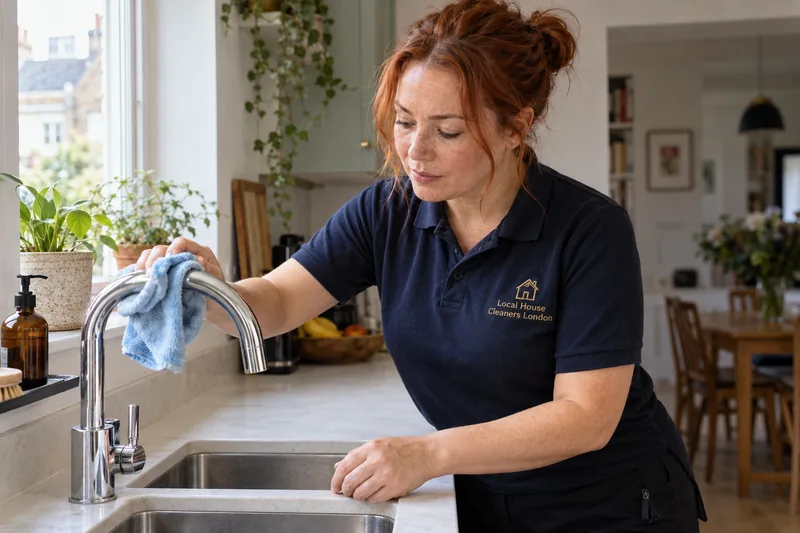
A professional cleaner carefully polishing a kitchen tap with a soft cloth.
A good working day starts before the first front door.

Choose places that fit your real journey

Knowing an area is useful. Knowing how you would get there on an ordinary working day is even more useful. Start with the places you can reliably reach from where you actually begin your day. Think about the bus, train, cycle or walking journey, the equipment you might carry and the final stretch to the front door. There is no benefit in selecting a large area if only a small part of it fits the hours you can offer.

Our working-area directory lets you browse North, East, South and West London, then move into boroughs, neighbourhoods and representative postcode districts. You can compare places without committing to work in every one of them. A postcode district is a helpful reference, rather than a promise that every address inside it will suit you. Two homes described by the same district can still involve different entrances, transport connections and walking distances. The complete address is what matters when a specific job is considered.

You might be comfortable with several nearby neighbourhoods during the week and prefer a smaller patch at weekends. You might know a particular borough well but need more notice for its outer streets. Explain that in straightforward language. Useful limits help the agency understand your offer of time and skills. They are more informative than ticking every area and hoping that an unsuitable journey can be sorted out after work has already been agreed.

Build a shortlist you can stand behind

Begin with a few places you know, then use the local pages to decide whether nearby areas belong on your list too. Check the place name alongside its borough and postcode references, especially where names are similar. London has neighbourhoods that cross postal boundaries and postcode districts that cover more than one recognisable place. Being precise about what you mean makes it easier to assess a suitable appointment and avoids treating a broad regional preference as unlimited coverage.

Consider the journey between visits as carefully as the journey from home. A morning address and an afternoon address may both be individually reachable but awkward to combine. Leave space for packing equipment away, providing a short handover and dealing with the actual route between homes. If you would only accept the second area on a separate day, make that clear. A manageable patch supports dependable work; it does not need to look impressive on a map.

Before any proposed visit is accepted, review the individual location and access arrangements. A flat above a shop, a converted house and a home inside a larger block can require different approaches even on the same road. Ask which entrance to use and whether stairs or shared doors affect the arrival. You do not need to publish private travel starting points in general application notes. Describe your practical coverage without sharing information that is not necessary for the application.

Keep your working area useful as life changes

Your preferred patch can change when your circumstances do. A different starting point, a change in transport or a new weekly commitment may make an old selection less practical. Keep the agency informed when your coverage changes and distinguish future preferences from visits you have already agreed to undertake. Updating a preference is not the same as cancelling an existing appointment. If a confirmed journey becomes a problem, raise it through the agreed contact route so it can be dealt with clearly.

The directory is there to help you make an informed choice, not to suggest that every listed neighbourhood has an immediate vacancy. A local page can explain how to think about work in an area while actual opportunities still depend on customer demand, your suitability and the agency's review. You should be able to explore an area without feeling pushed to offer hours you cannot maintain. Read the local information, compare nearby options and select the places that make sense for you.

For example, a cleaner who can comfortably reach two neighbouring areas before lunchtime may offer those as a morning patch and reserve another area for afternoons on a different day. That is a useful working preference because it describes something real. It also leaves room to assess each address, task list and appointment separately. Start with the patch you can deliver reliably, then discuss changes when there is a practical reason to expand it.

02 / AVAILABILITY THAT MAKES SENSE

Offer the hours that work for you. Include the time around them.

Clear availability is more useful than being available for everything. Tell us when you can work, what changes from week to week and how much room your journeys need.

Give your week a realistic shape

If you are looking for part-time cleaning jobs in London, start with the days and periods you can normally offer. Say whether a morning preference means you can begin at a particular time or need to finish by one. If your availability changes on alternate weeks, describe the pattern rather than choosing a general option that hides the difference. The purpose is to make your offer understandable. You do not need to make your week appear fuller or more flexible than it actually is.

Include the commitments that affect the beginning and end of an appointment without sharing unnecessary personal detail. A school collection, another role or a regular appointment can create a firm finish time. State the limit clearly and allow enough time to leave the customer's home properly. Finishing a task is only part of finishing a visit: equipment may need putting away, completion details may need recording and the agreed locking arrangements still need following before the journey home begins.

A useful availability note could explain that you can accept a morning visit in your chosen patch but need an afternoon appointment to start later because of travel. That is more helpful than selecting both morning and afternoon without a gap. Where a proposed job does not fit, ask for clarification before agreeing to it. A reliable answer about your hours makes a stronger starting point than accepting first and trying to rearrange the rest of the day afterwards.

Treat early starts and later finishes as specific arrangements

Some homes need an early visit; others need cleaning later in the day. Only offer those periods if the complete arrangement is practical for you. Check the actual start time, the route at that time of day and how access will work. Reaching a station at six in the morning is different from reaching the correct home ready to start at six. Any special timing, rate and working conditions should be understood before you accept the appointment.

Do not assume a late finish will be manageable because the outward journey was easy. Consider the return route, the equipment you will carry and whether you can complete the agreed handover safely. If an appointment is expected to run into a period you cannot work, raise that at the start of the discussion. An accurate schedule protects the cleaning time and gives everyone a clearer understanding of what has actually been agreed for that visit.

The same care applies to short-notice requests. A proposed visit tomorrow still needs a sensible journey, a clear task list, suitable supplies and an agreed rate. You are not expected to treat an urgent request as an unlimited instruction to make yourself available. Review the details that affect your ability to carry out the work. If you need a question answered before deciding, ask it rather than relying on an assumption about what the customer or agency probably meant.

Weekend cleaning work and early morning cleaning jobs can appeal for different reasons, but choosing those periods does not confirm that a suitable vacancy exists. State the hours you could genuinely offer and review each proposed visit separately. The same applies if you are interested in full-time work: explain your availability without planning around guaranteed full-time hours. Work depends on actual demand, completed checks, your suitability and the terms agreed for a particular opportunity.

Keep changes clear and timely

Availability is useful when it is current. Let the agency know when your regular hours change and explain whether the change affects future offers, existing appointments or both. If you need time away, give as much useful notice as you can through the agreed process. A general preference saved earlier should not be left to stand in for an update about a particular visit. Clear dates and times make it easier to understand the impact without chasing several versions of the same information.

When a journey problem or another delay becomes likely, communicate a realistic estimate as soon as you can. Explain whether you are still travelling, have arrived nearby or are waiting for access at the premises. Those are different situations. Do not describe work as started while you are on the way. Accurate information allows the next action to be based on what is actually happening and helps avoid the customer expecting cleaning to be underway when it has not begun.

A workable schedule also leaves you room to do careful work. Cramming several visits together can make every small delay affect the rest of the day. Start with the hours you can dependably offer, review a proposed appointment against them and keep the agreed finish in view. If the work appears likely to need extra time, raise it through the approval process rather than quietly extending the visit and hoping the diary will absorb the difference.

03 / A CLEAR JOB BEFORE THE FRONT DOOR

Know the rooms. Know the priorities. Know what you are agreeing to.

Domestic cleaning jobs in London vary from home to home. A useful brief makes the difference: understand the property, tasks, time, access and equipment, so your effort goes into the work that matters.

A professional cleaner wiping accessible shower fittings, wearing cleaning gloves.
The right task, the right tools and enough agreed time.

Read the home as well as the task list

A house, a flat and a studio can need very different plans. The number of rooms, the number of bathrooms and the levels you will work across all affect what is practical within a visit. Check which parts of the home are included and whether there are priorities that should come first. A request to clean a kitchen does not automatically explain the condition, the surfaces involved or whether the customer is also expecting the inside of appliances and cupboards.

Ask about the details that change how you approach the job. There may be delicate flooring, a surface that needs a particular product or a room the customer does not want entered. Some tasks may require moving small items; others may involve lifting that should not be attempted without an appropriate arrangement. Clarify the intended work before treating a general description as permission to do everything that could possibly be described as cleaning in that home.

Access belongs in the brief too. Confirm whether the customer will be there, whether another agreed person will let you in or whether a separate access process applies. Make sure the instructions identify the actual home, especially in a converted building or a block with several entrances. If the instructions do not work, contact the agreed person rather than trying a different property or assuming somebody nearby can authorise entry. A clear arrival helps protect the customer's privacy and your working time.

Make your cleaning skills specific

Describe the tasks you can confidently carry out: accessible dusting, vacuuming, suitable floor mopping, routine bathroom work and kitchen surfaces, for example. If your experience includes more detailed cleaning, explain the kind of work involved rather than using a broad label to cover every material or appliance. Being honest about your competence helps the agency assess a sensible fit. It also gives you a clear way to identify a task that needs different equipment, training or specialist knowledge.

Ironing, laundry and bed changes deserve their own place in the plan. Ironing requires suitable equipment and attention to garment care information. Laundry can involve sorting, loading, unloading and handling clothes even when a machine cycle runs alongside another task. Straightening a bed and changing its linen are different requests. These jobs use working time; they are not unlimited extras to squeeze around a full cleaning list. Check what is wanted and which task has priority if the available time is tight.

If a customer has another domestic request, the next step is to understand and assess it. The word 'other' should lead to a clear description, rather than an assumption that any household task has been accepted. Work involving specialist treatments, unsuitable heights, unsafe lifting or unfamiliar equipment needs particular care. Explain what you can do and what needs further agreement. A useful skills profile makes your strengths visible while leaving space to ask sensible questions about work outside them.

Agree a realistic result within the available time

Three hours is not automatically enough for every room and every extra. The actual condition, the task list and the level of detail all matter. Before accepting a visit, compare the requested priorities with the planned hours. If the list looks too long, ask which result matters most or whether the scope needs reviewing. A focused, agreed outcome is more useful than a long checklist that can only be attempted by rushing or marking unfinished work as complete.

When you arrive, the condition may be different from the information provided. Explain a material difference promptly and use the agreed process to discuss it. Do not make an unapproved promise about extra time or decide an additional charge on your own. If more work is requested during the visit, clarify whether it replaces another priority or needs a separate approval. Keep the person responsible for the arrangement informed so that the cleaning plan, the time and the expected result stay connected.

Finish with an accurate account of what was done and what remains. Where work photographs are agreed, show the cleaning result without exposing documents, faces, screens, keys or entry information. A concise handover can explain an inaccessible room, a surface that needed assessment or a task left outside the agreed hours. That is professional information, not an excuse. It gives the next conversation something clear to work from and helps future visits begin with a better understanding of the home.

04 / PAY THAT IS CLEAR BEFORE YOU START

Understand the rate. Check the hours. Agree the whole arrangement.

The starting gross rate is £15 per cleaner-hour across the cleaning services. Keep that starting point alongside the actual scope, timing and working terms of a proposed visit.

Know what a cleaner-hour means

When comparing home cleaning jobs in London, start by understanding the rate and the unit of time. One cleaner-hour means one person working for one hour. At the stated starting gross rate of £15, an agreed three-hour visit has a base amount of £45 for that cleaner's working time. That example is not a promise of an appointment, a take-home amount or a guaranteed weekly income. Review the actual offer and its working terms before deciding whether it suits you.

Gross means the amount before any applicable tax or other agreed deductions. The starting rate should not be confused with an advertised customer booking price or with money available to spend after your own costs. Cleaners cover their own travel, so the length and cost of the journey deserve a place in your decision. An appointment can look attractive in isolation but be less practical once the return journey, the time between homes and any equipment arrangements are considered.

The service name does not remove the need for a clear agreement. Regular cleaning, a one-off visit and more detailed work can involve different priorities and preparation even when the stated starting gross cleaner rate is the same. Check the expected hours and the tasks within them. If specialist work is being considered, clarify whether it is within your competence and what separate arrangements are needed. Do not assume that a label alone tells you what you will be asked to do.

Discuss changes before extra time is worked

A visit may need discussion when the condition is heavier than described or an additional task is requested. Raise that before extending the working time. Explain what has changed, how it affects the agreed priorities and what decision is needed. Extra time should follow the approval process for that appointment. Working longer without an agreement can leave the customer, cleaner and agency with different expectations, even when everybody wants the home to be cleaned properly.

Keep a straightforward record of the actual work period and any authorised extension. Distinguish an access delay, travel time and cleaning time rather than combining them into an unexplained figure. If a timing entry appears wrong, report it with the relevant facts. Accurate records support a fair review; a guessed finish time or an incomplete explanation makes it harder to understand what happened. The aim is a clear account of the work, rather than a complicated calculation nobody can check.

For unusual hours or dates, ask for the applicable arrangement to be confirmed. Do not assume a particular supplement from a customer-facing offer or from something that applied to another visit. Early mornings, evenings, urgent requests and holiday appointments still need their own agreed terms. This page gives the current starting gross rate; the specific proposal should make the full rate, duration and conditions clear before you commit your time to that work.

Judge an opportunity by the complete picture

Consider whether the proposed hours fit your availability and whether the journey fits your chosen patch. Check who provides the equipment and products and whether anything needs collecting or carrying. If a home has several levels, a long access route or a particular preparation requirement, understand that before accepting. An informed decision takes more than multiplying a rate by the advertised hours. It includes the work you can safely and competently deliver within the arrangement being offered.

Read the working terms and ask about any part that is unclear, including how completed work is recorded, how questions about an amount are raised and what happens when a visit changes. The information should relate to the arrangement you are actually entering. Do not rely on an assumption about a payment date, automatic extra money or a guarantee of recurring hours. If something matters to your decision, it is worth having it understood before the first appointment begins.

There is no guaranteed number of jobs or earnings from creating an account, sending an application or selecting an area. Opportunities depend on genuine demand, your suitability, completed checks and agreed terms. That makes realistic expectations part of transparent pay information. You can assess the starting rate and the practical working model without being promised an income the agency cannot honestly guarantee. Bring your experience, compare the complete details and decide on a suitable offer when one is available.

£15
Starting gross rate per cleaner-hour

The actual rate, tasks, planned hours and working terms must be agreed before work begins. Cleaners cover their own travel.

05 / CLEAR COMMUNICATION AROUND YOUR WORK

A proper conversation when the details matter.

Looking at cleaning agency jobs in London means understanding how the working details are agreed. Questions about access, priorities, delays or finished work need a clear route and useful information.

A professional cleaner wiping a kitchen worktop with a microfibre cloth in a tidy London home.
Useful information makes the next decision easier.

Ask the useful question before it becomes a problem

A clear question can prevent a difficult arrival. If the brief does not identify the entrance, the available equipment or the customer's main priority, raise the missing detail before you accept or begin the visit. Explain exactly what you need to know. A message saying that the address has two entrances and asking which one to use is more useful than a general note saying you are unsure. Specific information helps the person answering give a specific response.

When a task needs assessment, describe the material, condition or instruction that is causing concern. You do not need to improvise with a product you do not understand or promise a result that depends on specialist treatment. Ask for the relevant instruction and explain any limit in your experience. Professional communication includes knowing when to stop and clarify something. It is better to make the uncertainty visible than to hide it and create a problem with the customer's belongings or the agreed result.

Keep a distinction between a preference, a request and a confirmed agreement. A customer may mention a task they would like completed, but the visit may already have a full set of priorities. Explain what the additional request would change and use the agreed approval route. Once a decision is made, work from that decision rather than from several different versions of the conversation. A short, factual summary can help everyone understand the same plan.

Give accurate updates about arrivals and changes

If you expect to be late, report the situation early with a realistic estimate. Say whether transport is delayed, the address is difficult to locate or access at the premises is not working. These situations can need different responses. Avoid describing yourself as almost there when you do not yet know the remaining journey. Honest information allows the agency to understand the situation and consider the next step without relying on an arrival time that keeps changing.

If you are already at the home but cannot enter, follow the agreed contact instructions and explain the access issue. Do not enter another property, ask an unrelated person to authorise access or share a private code in a general message. Record what matters: the correct address, the agreed arrival time and the obstacle. The purpose is to resolve the visit responsibly while keeping household information private. Do not treat waiting nearby as proof that cleaning work has started.

Changes during a visit should be communicated just as clearly. A room may be inaccessible, a piece of equipment may fail or the requested workload may differ materially from the brief. Explain the effect on the planned work, rather than simply saying that the job is difficult. If there is a safer or more realistic priority order, describe it for discussion. Keep any decision about revised scope or extra time within the agreed process for that appointment.

Leave a useful handover, including when something went wrong

At the end of a visit, a concise account of the completed priorities can be more valuable than a long message. Identify any task that remains and explain why, particularly where the agreed hours were used on higher priorities. Do not mark a room or task as complete merely because it appeared on the original list. Accurate completion information gives the next appointment a sensible starting point and helps the agency answer a customer's question about the work that was actually carried out.

If damage, a safety concern or another problem occurs, report it promptly through the authorised route. Describe the facts and avoid guessing about responsibility before the situation has been reviewed. Where a photograph is appropriate and agreed, keep private documents, people, screens and security details outside the frame. A useful record shows the relevant issue without collecting unrelated household information. The same care applies when you have concerns about the instructions, access or behaviour you encounter.

Clear communication works best when it is calm, timely and relevant. You do not need to turn every routine task into a report, but information that affects the visit should not be left until somebody has to chase it. Use the contact arrangements provided for the work rather than assuming an unconfirmed channel is monitored. Keep your own contact details current, follow up an unresolved question appropriately and make sure an important change has actually been understood.

06 / A PROFESSIONAL START, WITH CHECKS

Let your experience speak. Complete the checks through the right process.

Creating an account is the beginning, not approval to work. Identity, relevant work eligibility and suitability need review before opportunities can be offered on agreed terms.

Present the experience you actually have

A useful application explains the cleaning you have carried out, the tasks you can deliver and the working habits you would bring to a customer's home. Give examples without naming private customers or sharing their addresses. You might describe how you prioritised a kitchen and bathroom within an agreed visit, cared for a particular surface or handled a request that needed clarification. Practical detail makes your experience understandable and is more helpful than a string of broad claims about being able to clean anything.

Be clear about areas where you need instruction or further experience. The agency needs an accurate view of your suitability, and you need an arrangement that fits your competence. A household can contain unfamiliar equipment, finishes and cleaning products; knowing when to ask is part of careful work. Do not present a specialist skill simply because you have done a superficially similar routine task. Explain the difference and keep any limitation visible when a particular job is discussed.

References or other supporting information may form part of the review where appropriate. Provide information you are entitled to share and use the requested route. An application is not a place to upload somebody else's personal details, photographs of private homes or documents unrelated to the assessment. The strongest submission is complete, specific and relevant. If the agency needs clarification, answer the actual question and keep your account information consistent with what you have provided.

If you are searching for cleaning jobs with no experience, be open about the experience you do have, including relevant domestic tasks. Explain what you can carry out confidently and where you need instruction. Limited formal experience is something to discuss during assessment; it is not automatic acceptance or a promise of training or work. The agency still needs to review your practical competence, the required checks and suitability for the actual tasks.

Keep identity documents out of ordinary notes

Identity documents need the designated secure verification process. Do not place a passport, driving licence or other sensitive identification in an experience paragraph, a general contact message or a photograph of completed cleaning. An ordinary application field is for the information that field requests. If you are unsure where a document belongs, check the instructions before sending it. The fact that a form can accept text or a picture does not mean it is the right place for every kind of information.

Use your own accurate details and make sure the name and contact information on your account are current. Where a verification instruction requires particular evidence, follow that instruction rather than substituting unrelated material. Any relevant work-eligibility assessment also needs the appropriate process. Do not assume that creating an account or receiving an application reference means those checks have been completed. They are separate parts of the preparation before an account can be approved for work.

The Local House Cleaners London privacy information explains the handling of cleaner application and account information. Read it before providing personal details and keep general questions free of unnecessary sensitive material. You can ask about the intended process without sending the document first. This is particularly useful if a name has changed, an instruction is unclear or you need to understand which information is relevant. Giving the right information through the right route is more useful than sending a large collection of documents for somebody to sort through.

Understand what approval does and does not mean

The agency reviews your details and suitability before approving work. Your skills, practical working area and availability all contribute to understanding what could be appropriate. An application being received means it has been recorded for review; it does not mean a customer visit has been assigned. Keep the distinction clear as you move through the process. If a detail changes while your application is being considered, use the available account or contact route to explain the change.

Approval does not create a guarantee of immediate work, fixed hours or a particular level of earnings. Actual opportunities depend on customer demand and a suitable match, along with the agreed working terms. It is sensible to understand that before planning around an assumed diary of visits. A professional application gives the agency a reliable picture of what you can offer while allowing each proposed appointment to be considered on its own location, tasks, timing and conditions.

Before work begins, make sure the relevant arrangements have actually been agreed. Ask about an unclear rate, an equipment responsibility or a condition that affects your ability to deliver the visit. Do not rely on a general website statement to answer every detail of an individual job. The point of the preparation is to reach a clear, suitable arrangement. Careful checks and an honest conversation help that happen without treating a sign-up button as permission to start work immediately.

07 / A STRAIGHTFORWARD NEXT STEP

One cleaner account. Your application, without the guesswork.

Start with your own account, then explain your skills, preferred areas and available times. Keep the next action clear while the agency reviews your suitability for work.

A professional cleaner cleaning a tiled kitchen splashback with a microfibre cloth.
Start with the skills and hours you can confidently offer.

Prepare the useful details before applying

An application for private house cleaning jobs in London does not need a complicated pitch. Have your current contact details ready, think about your relevant cleaning experience and decide which tasks you can confidently offer. Make a short list of the areas you can reliably reach and the days or periods that suit you. Include limits that would affect a proposed visit. A clear description of a manageable working week is a useful starting point for the agency's assessment.

The application separates the type of cleaning from your specific task experience. You can explain routine cleaning skills alongside ironing, laundry or other relevant domestic tasks without implying that every service includes every extra. Select the languages you speak so communication preferences are understood. That is separate from the website language selector, which helps you use the site's controls. Place names and detailed local information may remain in English; the languages you speak describe you, rather than a setting on the page.

Keep your examples concise and relevant to cleaning in somebody's home. Describe how you respect instructions, care for belongings and raise a problem when a task is unclear. Avoid private customer names, access codes or identity documents in general notes. If your experience is varied, focus on the parts that help the agency understand your current skills. The aim is an accurate application that can be reviewed, rather than a long description that makes your practical offer difficult to find.

Create an account, then complete the application

Use the cleaner account route for your own details and keep your sign-in information private. The application belongs with that account, so use the same signed-in cleaner identity when you complete it. If you already have an account, sign in rather than creating another one to repeat the process. An account helps keep the stages together, but it does not remove the need for the application, required checks and agency approval before any work can be offered.

Work through the choices in a sensible order: cleaning experience, services and tasks, local coverage, availability and the remaining contact information. Review the details before sending them for consideration. If something does not accurately represent your offer, correct it first. A small, dependable patch and clear hours are preferable to a broad selection that you would need to withdraw later. Where the form asks for a written explanation, give the practical information the agency would need to understand the selection.

After submitting, rely on the actual confirmation shown by the account process. An application reference identifies a received record; it is not an approval notice or a promise of a visit. If a connection does not complete, check the application status before trying to create another submission. Keep any reference you are given and use it when raising an application question. Clear progress information should help you understand the next step without repeatedly sending the same details.

Stay accurate through review and the first suitable offer

During review, keep your contact information, skills and working preferences up to date through the appropriate account process. If clarification is requested, answer with the relevant facts and use the secure route for any required identity evidence. A change in application status should be read for what it says. Being under review, being contacted and being approved for work are different stages. Do not assume that time passing or a completed form means the remaining checks have been accepted automatically.

When a suitable opportunity is available after approval, read the individual brief before agreeing. Compare the address with your patch, the timing with your real availability and the tasks with the skills you have offered. Check the planned hours, the full rate and the equipment and access arrangements. Raise a question while there is still a decision to make. A well-prepared application helps start that conversation, but it cannot replace the details of the actual home and appointment.

If Local House Cleaners London feels like a practical fit, choose a useful next step: explore the opportunity if you are still assessing the model, read the requirements if you want to prepare, or create your cleaner account when you are ready to begin. You can also return to the working-area directory to refine your shortlist. There is no need to promise every service or every part of London. Bring an honest account of your experience and choose the work you can carry out with care, clear communication and realistic expectations.

BEFORE YOU MAKE YOUR NEXT MOVE

Cleaner opportunities.
Your questions.

Read all cleaner FAQs
Does an application guarantee work?

No. Your experience, skills, working area and availability are reviewed with the required checks. Approval and any proposed work depend on suitability, genuine customer demand and agreed terms. A received application is not a confirmed vacancy or a guarantee of hours or income.

What is the starting gross cleaner rate?

The starting gross rate is £15 per cleaner-hour across the cleaning services. One cleaner-hour means one person working for one hour. Cleaners cover their own travel. Check the actual rate, duration, tasks and working terms of each proposed appointment before accepting it.

Can I apply for part-time or weekend cleaning work?

Describe the days and periods you can genuinely offer, including weekend or early morning availability if it is practical. Selecting those times expresses your availability; it does not confirm a suitable vacancy. Full-time interest can also be discussed without a promise of full-time hours.

Do I need to cover every part of London?

No. Choose the neighbourhoods you can reliably reach. The directory groups North, East, South and West London, then boroughs and local areas. Postcode districts help you compare places; each proposed visit still needs a full address and a suitable journey.

Can I include ironing and laundry?

Yes, describe those skills if you can carry out the tasks competently. They use agreed working time and need suitable equipment and instructions. Explain your limits and check how additional tasks fit alongside the main cleaning priorities of a particular visit.

What if I have limited formal cleaning experience?

Be honest about relevant experience, including the domestic tasks you can confidently perform. The agency must still assess practical competence, required checks and suitability. Limited experience does not automatically rule in an applicant or guarantee acceptance, training or work.

Is the website language the same as the languages I speak?

No. Website language selects an available translated edition of the site. The languages you speak are recorded separately in your application to help with communication. Place names and information you enter are kept as supplied. If any wording is unclear, ask the agency for clarification.

Where should I send identity documents?

Use only the designated secure verification process for required identity evidence. Do not put passports, driving licences or other sensitive documents in general application notes, ordinary messages or photographs of completed work. Read the instructions before sending any document.

YOUR EXPERIENCE. YOUR NEXT STEP.

Bring your skills.
Start with a practical local fit.

Create your cleaner account when you are ready, or read the application process first.