Be precise about your patch.
Limehouse is listed with E14. These are representative postcode districts, not exact boundaries. A complete job address and your starting point matter more than a district label.

Make a local preference practical by explaining the household work and hours you can genuinely offer. Describe your Limehouse experience and coverage, with each real appointment assessed through its own full address, tasks and terms.
Each job is agreed around its address, tasks, hours and your suitability.
 Limehouse · E14
Moving area names stop while hovered or focused. Press Enter or Space, or tap the moving area, to keep them still after leaving. Activate again to allow movement. Browse the directory for the complete list.
Choose the work you can deliver reliably, with clear travel limits, availability and skills.
Limehouse is listed with E14. These are representative postcode districts, not exact boundaries. A complete job address and your starting point matter more than a district label.
Share the days and hours you can reliably work, allowing time between visits. Early starts, evening finishes and any travel limits need to be clear before a job is agreed.
Tell us which cleaning tasks you can confidently deliver. Ironing, laundry and detailed cleaning use agreed time; specialist work needs the appropriate skills and equipment.
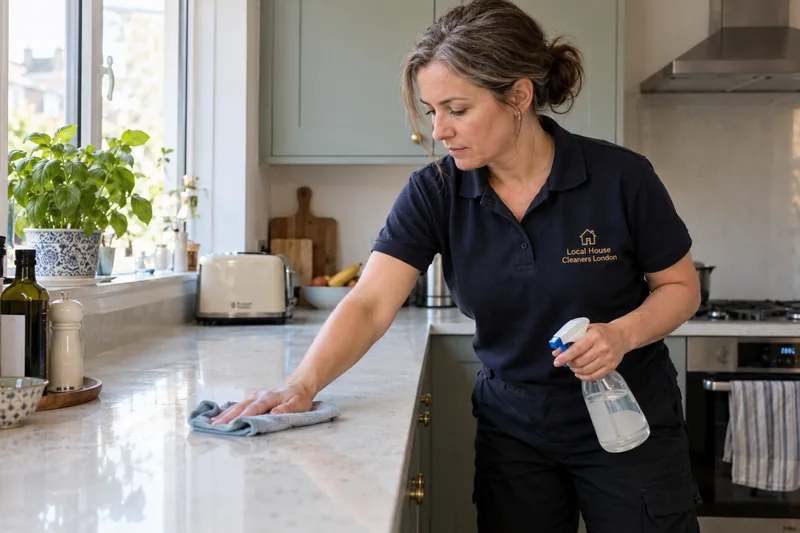 Limehouse · E14
Whitechapel · Bethnal Green · Bow · Mile End. Compare your preferred areas and check the complete address and journey before agreeing any work.
Historic England records St Anne’s Church on Commercial Road with an E14 reference. TfL identifies the named Limehouse station, while Tower Hamlets’ Central Area material discusses particular townscape including Narrow Street. These documented public places help locate the locality in the working directory. They do not advertise a cleaning vacancy at a church, station or street, nor identify a private customer’s destination. A proposed household visit needs its own complete address and authorised entry arrangement before you can assess the actual journey and commitment involved.
Explain which part of Limehouse you could consider from your real starting point and any difference across available days. E14 supports browsing without requiring you to accept every associated home. A defined patch gives the agency realistic information for assessing a request and gives you a useful basis for comparing the full offer. Nearby entries can be explored individually instead of added automatically, keeping coverage connected to manageable journeys, working windows and other commitments rather than assume a familiar public name makes every private destination equally practical in your day.
 Limehouse · E14
A public townscape description cannot identify a surface finish or care requirement inside a particular property. Read the actual material information and ask about unfamiliar items before choosing a treatment. Describe the ordinary methods and equipment you can use responsibly. This judgement is useful because it protects the household’s possessions and keeps the boundary of the accepted task understandable, rather than let an uncertain mark become a reason to attempt an unsuitable method.
Personal belongings require agreed handling limits too. Establish what may be moved for a selected task and its return position. Ordinary cleaning should not become unrequested storage reorganisation or a decision about where possessions belong. If an obstacle or missing supply affects accepted work, identify the particular priority and seek a decision. Other agreed tasks may still be possible while the issue is resolved. A specific update keeps your time useful without hiding a limitation or making a private choice that the household never included in the original request.
Describe domestic work you have actually performed and relevant equipment knowledge rather than rely on an unlimited list of service labels. Accessible kitchen surfaces, maintaining bathroom fixtures, agreed dusting and suitable floor care are duties that can be assessed against a request. State additional skills and relevant limitations accurately. This gives the agency useful information for assessing suitability and identifying the care instructions or supplies a brief would need, without assuming that general cleaning experience establishes competence with every unfamiliar material or specialist treatment.
A real brief should identify actions, exclusions and priorities, not simply name rooms. Distinguish kitchen surfaces and appliance exteriors from separately requested interior work, and establish the relevant bathroom fittings and floor areas. A purposeful sequence helps direct effort where the customer wants it and gives everyone an understood result to expect, rather than a broad promise to finish every possible task equally regardless of time.
If condition materially differs from its description, explain the particular priority affected and its impact on the remaining list. The customer and agency can choose whether to revise tasks or consider authorised additional time where appropriate. Your own ability to stay remains relevant. Handle new requests explicitly too: wanting another service, being willing to help and approving a changed appointment are distinct matters. A realistic decision protects an achievable outcome and supplies a useful reference if a question later concerns the accepted scope, finish or actual working hours.
The starting gross rate is £15 per cleaner-hour. Consider those details with the journey and your available window rather than rely on the headline figure to settle every practical question. An hourly rate explains the basis of pay but does not establish a vacancy or guarantee earnings. Clear terms let you assess a concrete commitment and give the agency and household an understandable account of what was accepted if a request changes during the appointment.
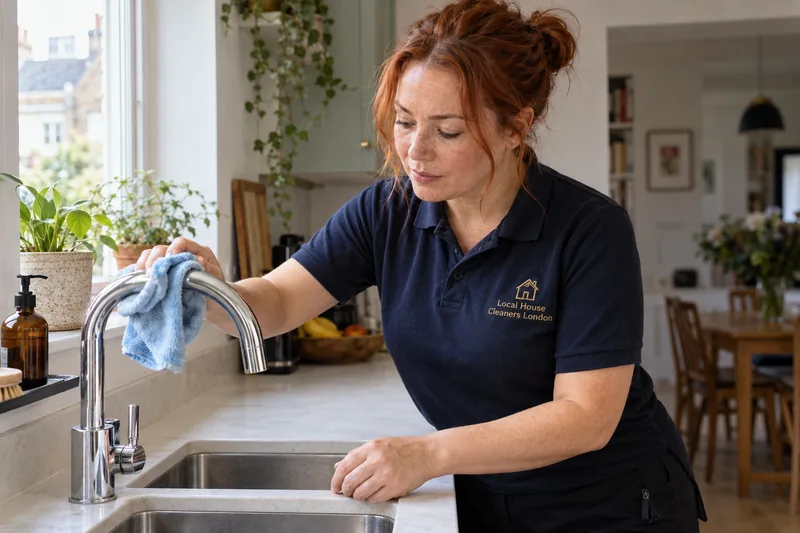 Limehouse · E14
Ironing, laundry support and bed changes can add useful skills where the household selects them and you can perform them competently. An ironing allowance needs suitable equipment and garment-care information. Laundry should identify stages such as starting a load or folding, together with a handover for anything still running at the booked finish. Completing one part is not the same result as finishing an entire washing request, and a continuing cycle does not automatically authorise further working hours while you wait at the home.
For linen changes, agree the included beds and the handling of clean and used items. If another task is proposed, explain what it changes and seek the appropriate decision before undertaking it. A well-defined combination makes extra household help useful because the customer can understand the intended outcome and you have enough time and information to deliver it. It avoids a collection of informal additions displacing accepted work without anyone clearly choosing the trade-off.
Give an achievable arrival and latest finish, using current information for the actual destination; no route duration from Commercial Road or another reference is guaranteed here. Explain whether availability recurs or is occasional and keep it current. Prepare accurate contact details, relevant experience, selected services, working languages and a practical local preference for review. Required checks and agency approval precede allocation. Sensitive identity evidence belongs in the designated secure process instead of general notes, while declared spoken-language skills remain separate from the website interface setting.
At the finish, record actual working time and describe completed priorities, authorised changes and outstanding tasks. Where images are permitted, concentrate on the relevant cleaning result without people, private documents or security information. Follow the leaving instructions too.
When assessing an offer, separate the hourly basis from the actual commitment. Understand the selected duties, agreed allowance and relevant arrangements for an authorised extension. Your own journey and latest finish remain part of deciding whether to accept, even where the headline rate is clear. If a new request appears during the work, identify its effect on existing priorities and obtain a decision before treating it as extra paid time. A useful discussion leaves the customer, agency and cleaner able to recognise the same accepted arrangement rather than rely on different memories of an informal conversation at the property.
Your completion record should then reflect what happened under that agreement. State the working time accurately and explain a material change or unresolved question rather than quietly convert it into approval. If a priority remains outstanding, identify the relevant task and decision needed; do not let an unclear note imply that the entire service was finished. The designated agency channel is the place to seek a resolution. This professional account supports a review of the actual work without inventing earnings or a guaranteed schedule. It also makes the household’s next step more understandable, because the result and any remaining action are described in practical terms rather than hidden inside a general statement of completion.
Historic England places St Anne’s Church on Commercial Road. TfL identifies the named station, and the council’s Central Area material discusses townscape including Narrow Street. These are public geography references, not advertised agency vacancies.
No. The actual property’s materials, care instructions and selected tasks determine suitable methods. Public area descriptions cannot establish an individual interior or authorise specialist treatment.
Yes. Give an achievable earliest arrival and latest finish, considering the actual journey and other commitments. State whether the periods recur or are occasional, without treating a preference as guaranteed work.
Explain the remaining accepted outcome, the additional period proposed and whether you can provide it. Obtain the relevant authorisation so a later account of the hours reflects a clear agreement rather than an informal assumption.
Keep your details together with a private cleaner account.
Complete your application with your skills, working areas and dependable availability.
Complete the secure verification process for identity and relevant work eligibility, followed by agency review before approval for work.
Once approved, consider suitable jobs when there is genuine demand. Work is not guaranteed.
Work is subject to agency approval, agreed terms and customer demand.
Cleaner approval includes a review of identity, relevant work eligibility, experience and practical competence. Any work must have an agreed scope, rate and working arrangements before it starts.
Identity checks require a separate secure process. Do not send identity documents through general application fields or job photographs.
Read the application processSee the area before choosing your working patch. Check the actual job address and journey before accepting work.
Area reference only. This map does not mark a company office or confirm service boundaries.
This embedded map is provided by Google, which receives connection information and may use cookies. Google privacy information.
Explore the opportunity and application steps before choosing your working areas.